10 Reasons That People Are Hateful Of Transit Wheelchair Vs Self Propelled
Transit Wheelchair Vs Self Propelled A transit wheelchair (also called an attendant chair) is designed to be pushed by an attendant, such as caregivers. They usually have push handles at the back and fold down for easy storage or to fit into the trunk of a car. They are also ideal for use on public transport like buses and trains. Size Self-propelled wheelchairs allow the user to move around without having to rely on someone other than them to push them. This means that they can go to the shops, meet friends or take a walk at a time that is convenient for their schedule, and not have to wait for someone to be available. Self-propelled chairs are equipped with a range of push-rims, that allow users to move more easily and efficiently. The rear wheels are larger to make it easier for them to navigate over obstacles. Whether the wheels are pneumatic (air) or solid will affect the difference in the amount of weight that can be pushed across rough surfaces. It is essential that the weight is within a safe range. Transit wheelchairs, also known as attendant-propelled chairs, have smaller frames and wheels that are lighter making them suitable for short-distance travel when they are being pushed by an attendent. These kinds of wheelchairs are usually employed by health care facilities and hospitals to transport clients from one location to the next like when they take an excursion to town or visit friends. They are also frequent in airports, where staff make use of them to help passengers from their arrival gate to the plane. It is crucial to select the right transit chair with the right seat width and depth that are suitable for the person. It will allow the user to sit in the chair in the most comfortable posture, thereby improving mobility and overall well-being. This can also lower the risk of developing pressure ulcers and other medical issues. It is also worth considering any additional features included on the wheelchair, like detachable armrests or a reclining backrest, since these features can make it more comfortable to sit in and also fold up for storage or transport. Some wheelchairs have wheels that are quick release and can be easily removed to make the wheelchair lighter and easier to move or store. This can be a safety feature as it prevents the wheel from getting stuck in transport. Weight The weight of a chair can be a significant factor in its ability to move over various terrains and maneuver. Transit chairs, which are specifically designed to travel a short distance with an attendant, are a great example. They have smaller wheels and lighter frames than other wheelchairs making them easy to push along. They are also a good option for local trips such as shopping and visiting friends. It is essential to consider the passenger's expectations and needs when choosing a transit wheelchair. Seat width and depth should be adjusted to accommodate the size of a passenger. Cushions for wheelchairs with padding can be used to enhance comfort and reduce the risk of pressure ulcers. Self-propelled wheelchairs, on the contrary, have large rear wheels that permit users to propel themselves even while seated. These chairs are designed to be moved by a family member or attendant but they can also be used to propel themselves. Wheelchairs are available in various styles and sizes to meet various needs. It is crucial to consider what you want to achieve with your chair before choosing whether you should choose a self-propelled or transit chair. If you plan to use a wheelchair outdoors then it is generally preferable to choose one with larger rear wheels which will enable you to effortlessly navigate down steep slopes and climbs. In addition, wheelchairs with large rear wheels are also more stable and can help lessen the risk of tipping on uneven surfaces. If you are unsure what kind of wheelchair is the best for you or are thinking about a new upgrade, it is advisable to consult an expert who can provide you with the best options for a wheelchair that meet your requirements and help you in deciding on the best model. If you're interested in learning more about our range of wheelchairs then contact us today to speak to a specialist. Our team of knowledgeable and friendly experts can help you find a wheelchair that will meet your specific requirements. Stability A transit wheelchair, also known as a transport chair, is the image that many people have when they think of a wheelchair. It has four wheels and two handles on the back to allow an attendant to propel the user around. They are great for trips to the shop or when you go on vacation, because they can be pulled by an attendant. They are light and compact which makes them easy to handle and to store. My Mobility Scooters is one of the most important factors to take into consideration when selecting a wheelchair. The position of the rear wheel is a key aspect in determining how stable the chair is. A chair that has its wheels well forward of the client is often very unstable and is prone to tipping. This is particularly a problem in the outdoors, where there could be obstacles to travel through. Wheelchairs with the rear wheel further back are generally more stable, but it can hinder the capacity of the user to perform the 'wheelie' or to walk over small steps. The seat-to-floor distance of the wheelchair is another factor to take into account. If a person is very tall or has arms that are short, they may need to choose a different model. This is due to the fact that they will be unable to reach the hand rims comfortably while sitting in the chair. 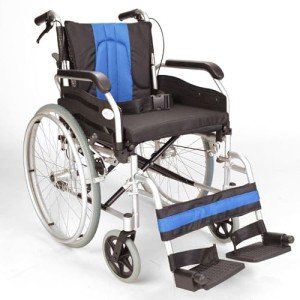 Self-propelled wheelchairs on the contrary, are more suited to maneuver through rough terrain than assisted counterparts. The reason for this is because they have larger rear wheels and push rims which can be easily reached by the user. Self-propelled wheelchairs are typically moved over obstacles such as gravel, grass or small steps. If a person is planning to be using self-propelled wheelchairs, it is worth working out their routes in advance to ensure that they are not stuck on the side of the road facing an unexpected obstacle. It is also worth considering whether the chair will be used indoors or out and the type of terrain to be encountered can affect the ability to travel independently. Mobility A wheelchair is an essential piece of equipment for many disabled and elderly people who are unable to walk or stand for long periods of time. There are two types of manual wheelchairs utilized for this purpose: self and transit. powered. Transit wheelchairs are designed to be driven either by a nurse or a caregiver. They are usually a good option for wheelchair users who require the assistance of an attendant when traveling long distances. They have smaller wheels on the rear which allows for a tighter turning radius. Their frames are also lighter which makes them easier to push. They are also usually easy to fold and can fit into the car boot for storage or transportation. Self-propelled wheelchairs on the other hand, are able to be controlled by the user themselves by using their upper body strength. The large rear wheels on these chairs can be driven by hand rims that assist the user in moving their chair forwards and backwards. This helps wheelchair users keep their independence and control their daily choices within a particular environment. Each model of wheelchair has its advantages, but it's important to consider the use of the wheelchair before purchasing. If the wheelchair is used to travel over long distances, it needs to be strong enough to stand up to wear and tear. It might also be necessary to choose a model that can deal with difficult or uneven surfaces such as gravel, grass or even small steps. It is also a good idea to consider the accessibility of the wheelchair and if it will be easily retracted and deployed. This will be a significant factor for those wheelchair users who wish to travel by train or coach as these vehicles usually have limited space. It is also worth looking into the wheelchair's ability to go through metal detectors in ports, airports or cruise ships if it will be a regular feature of a wheelchair user's international travel.